Saturday, August 24, 2019

Óbidos - Day trip with José Miguel


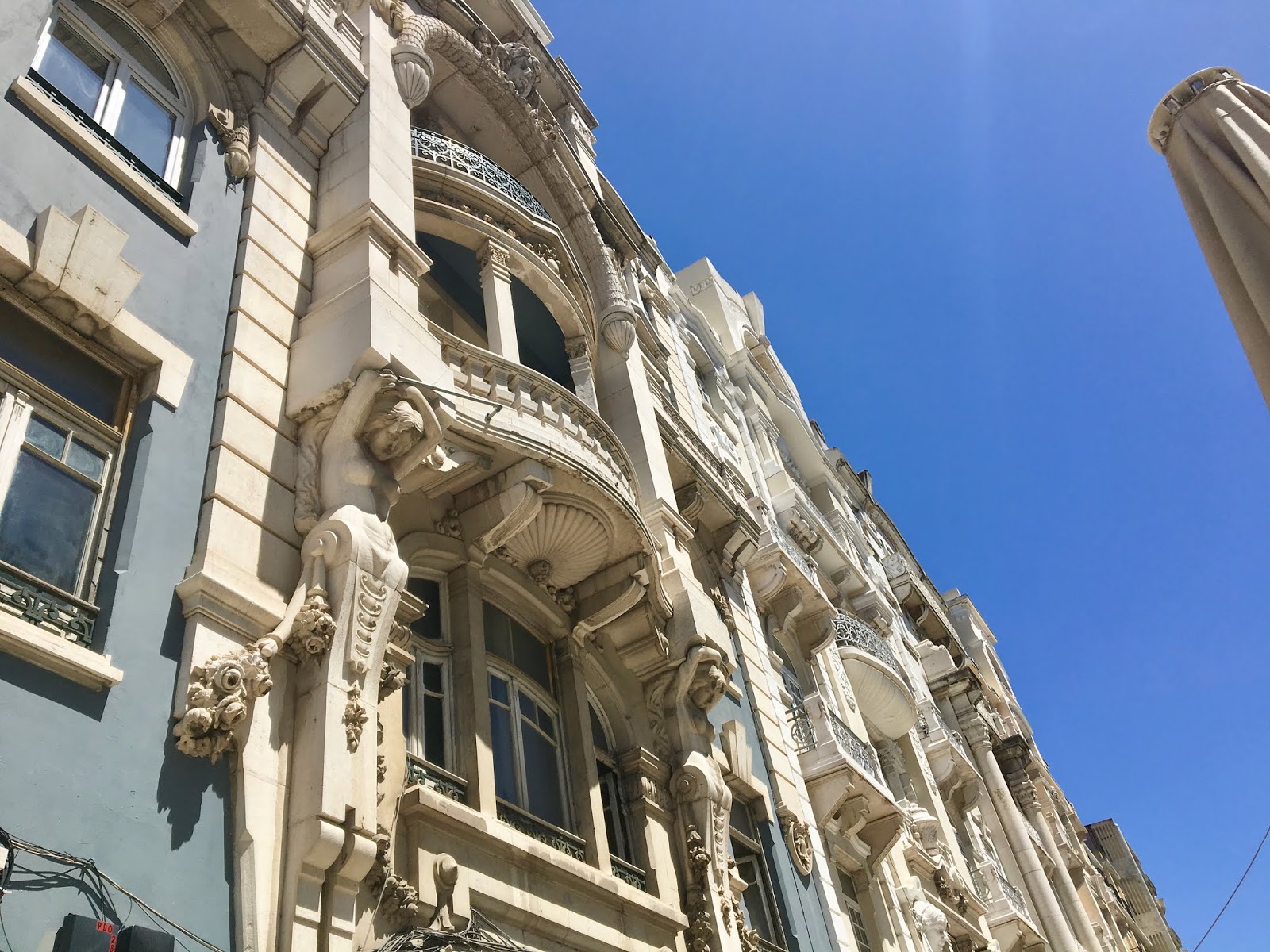
We are invited to spend a day with Donna's cousin, José Miguel, at his home in Bombarral. It's just over half an hour north of Lisbon on the A8. He suggests a trip to the walled town of Óbidos, another town over, and the former home of many of the Queens of Portugal. As we drive out of Lisbon, past the outer towns of Odivelas and Loures, the urban fabric dissolves, and we are left with rolling hills, pear orchards, and vineyards, looking much like the North Bay of San Francisco.

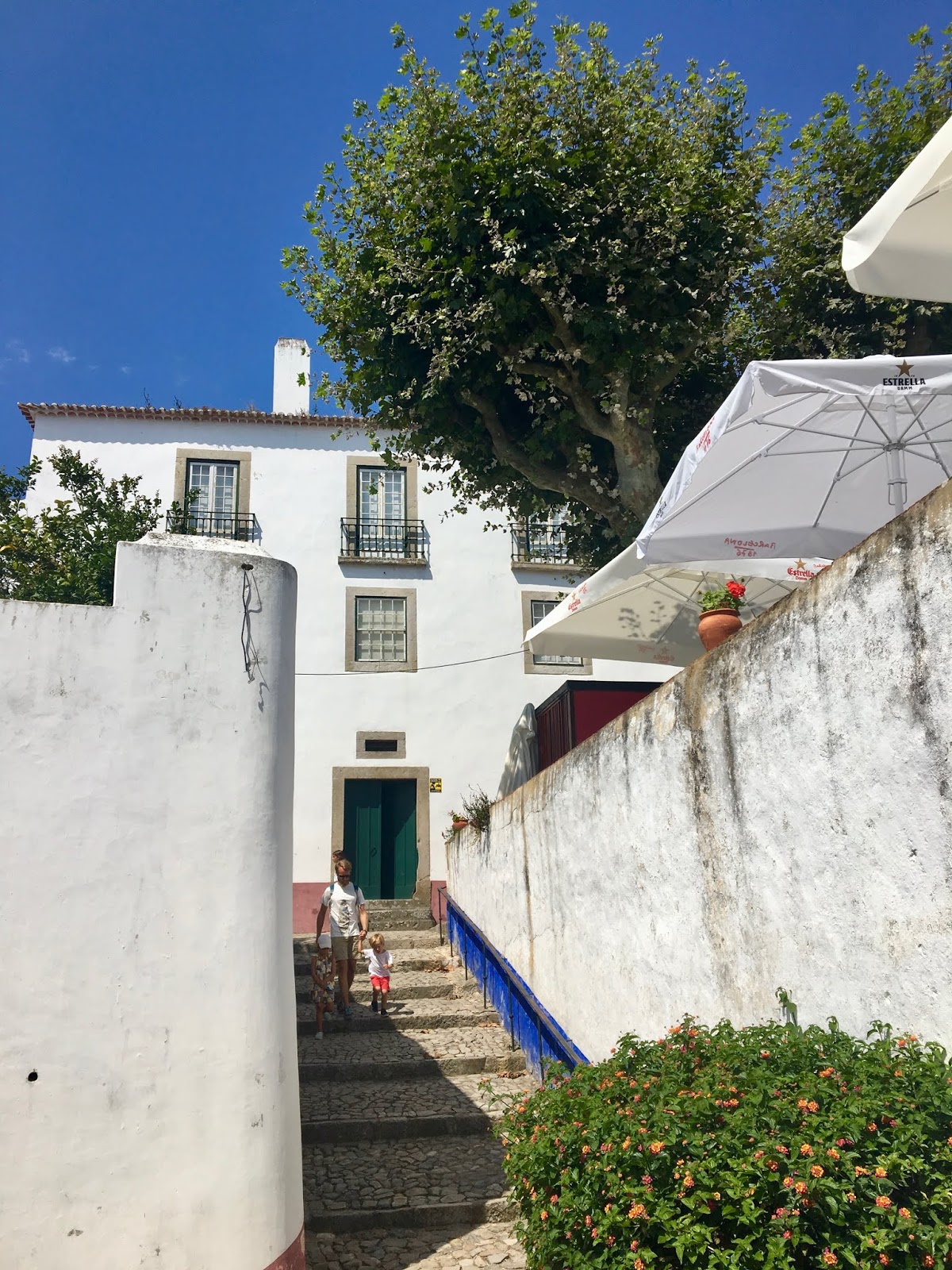
Óbidos is set on a small peak in a wide valley. With our view on the highway, the towers are clear, and the layout of the town appears to be a simple, white stroke across the crest of the hill, surrounded by green cultivated lowlands. From the highway, we turn toward a series of dusty parking areas and leave the car. We pass a small, ruined aqueduct and fountain, set in a breezy open area where horse-drawn carts await passengers. We enter through a tower gate, suddenly dark, then find ourselves at a fork between two stone roads, with a cramped, crowded praça – one road leads down to the right, and one on-level to the left. Both paths are filled with people moving slowly, taking lots of selfies. We go left.


We get glimpses of the fields beyond through the breaks in the streetscape, whitewashed and trimmed in shocking blue and ochre yellow. The tiny but tidy old buildings are filled with souvenir shops and ginjinha stalls, serving chocolate cups with sour cherry liqueur. The crowds inch their way in and out, children stumble around with cold soda cans, drinking through straws.

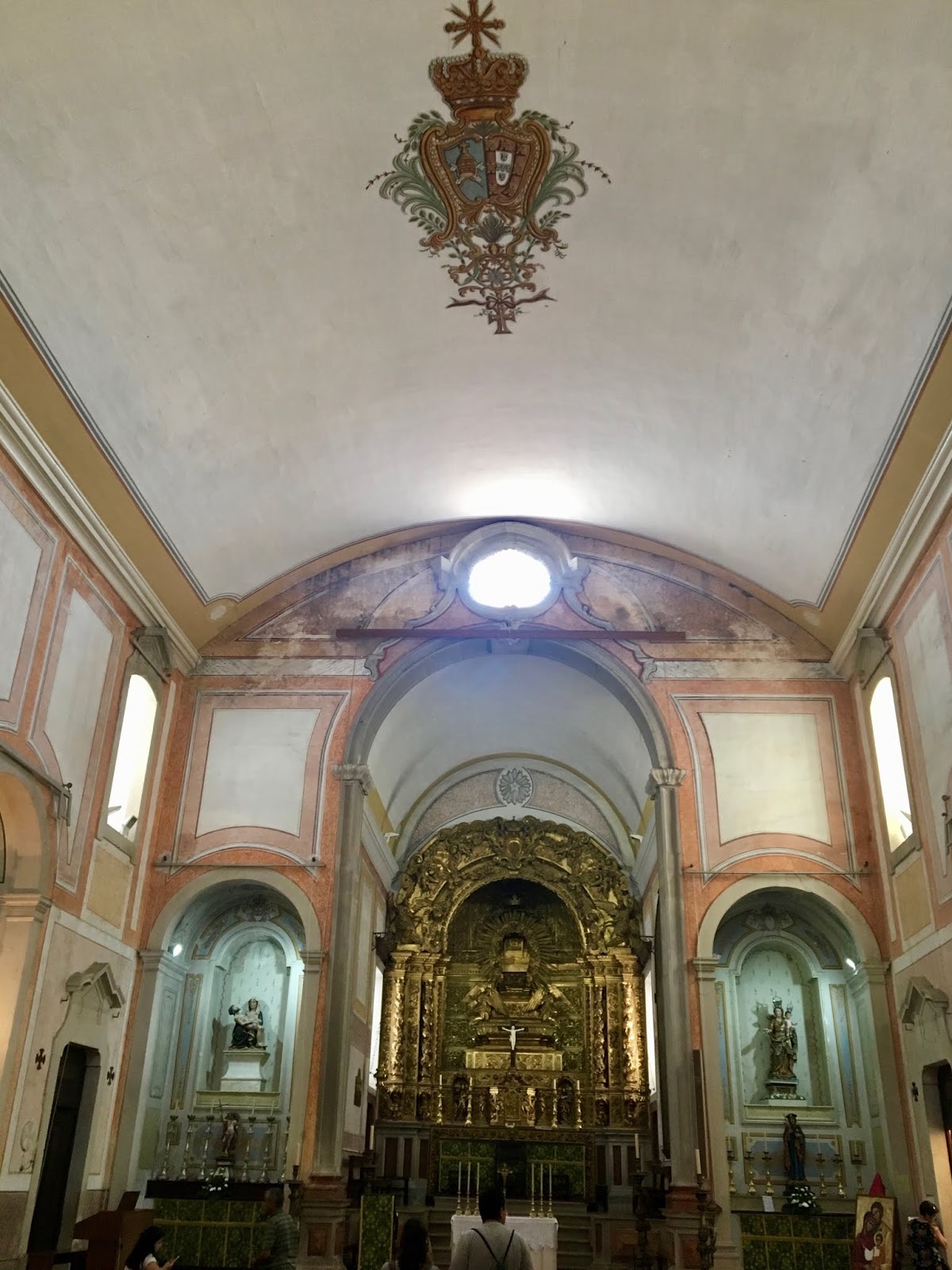
The road widens and breaks downhill, not quite a square, and there is a bell tower and a church, the Igreja Paroquial São Pedro. Inside, the church is roomy, bright, and clean, with gold-toned poly-chrome and a splashy altar piece. Opposite the church is, apparently, a crypt – dark, modestly unlit, with some very nice stonework.


We begin our slow amble uphill to the castelo, the roads edged in flowers, and the battlements and orchards continue to go in and out of view. There are moments when the road seems to split open to a vista, fork uphill and down, then the view closes again and the road returns to its blue and yellow cadence.


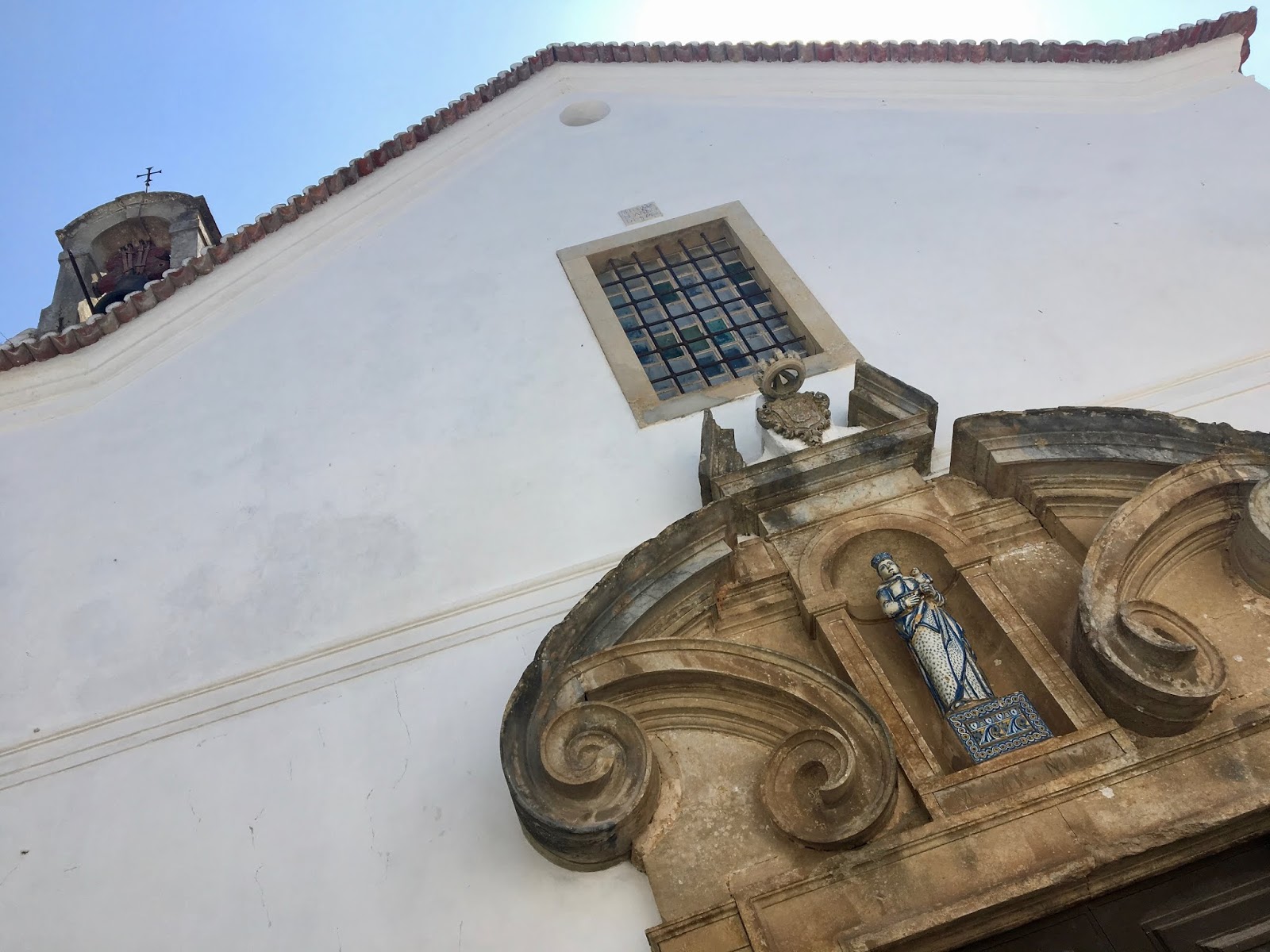
We turn a corner and find ourselves in a wider open plaza, a trio of knotted trees, and an intricate baroque fountain at the other end. We turn to see a rather proud-looking church. This is the Igreja de Santa Maria. Entering from the triumphal doorway, the interior is alive with azulejos, carved stone, and painted ceilings. I suppose this is where the queens would pray.


Our destination comes into view as we leave the Praça de Santa Maria. Flowering trees mark the way, and the breeze returns as we near the top. Imposing and protected, the Castelo de Óbidos is now a Pousada, one of a group of unique, Portuguese boutique hotels. From the parapet, there are outstanding views to the village and the surrounding farms.


Behind the Castelo is a re-created medieval market, though currently empty. It's a bit Disney-esque. A large Shakespearean theater is on the other side. At the far end of the seating area is a narrow, steep stone stair, with no railing. We pass a series of serious-looking warning signs and ascend to the tower, for the breath-taking views around. José Miguel tells me that the tidal inlet used to reach the base of the fortress, and that the formal "royal" approach was by boat, past a small church – the Queen and her party would be blessed upon arrival and before departure from that church. The church is now a stone ruin at the edge of a farm plot. Looking out, it's hard to imagine the whole area flooded by seawater – and we both remark that it may yet happen again, if the climate scientists are right. And we feel bad for the farmers.


Thursday, August 22, 2019

Museu da Água - Mãe d'Água e Aqueduto das Águas Livres


Today we take a tour of two of the sites that make up the Museu da Água, a group of infrastructure facilities that delivered water to the city as recently as 1974. The oldest of these structures dates from the 1730's (these do not date from Roman times). We start at the Mãe d'Água (Mother of the Water), essentially a colossal, stone water tank next to the Jardim das Amoreiras, which distributed water to a series of public fountains downstream. A portion of the Aqueduct forms the western edge of the park, and a small church sits within one of the arches. There is a series of azulejos panels, in the lower plaza, that tells a part of the story of water. Through the Doric gate (two-way-traffic in a one-lane arch, with trolleys!), around the church, and up a set of stairs, and you pick up the trickle of the fountain in the center of the park – a small hint of bigger things inside.


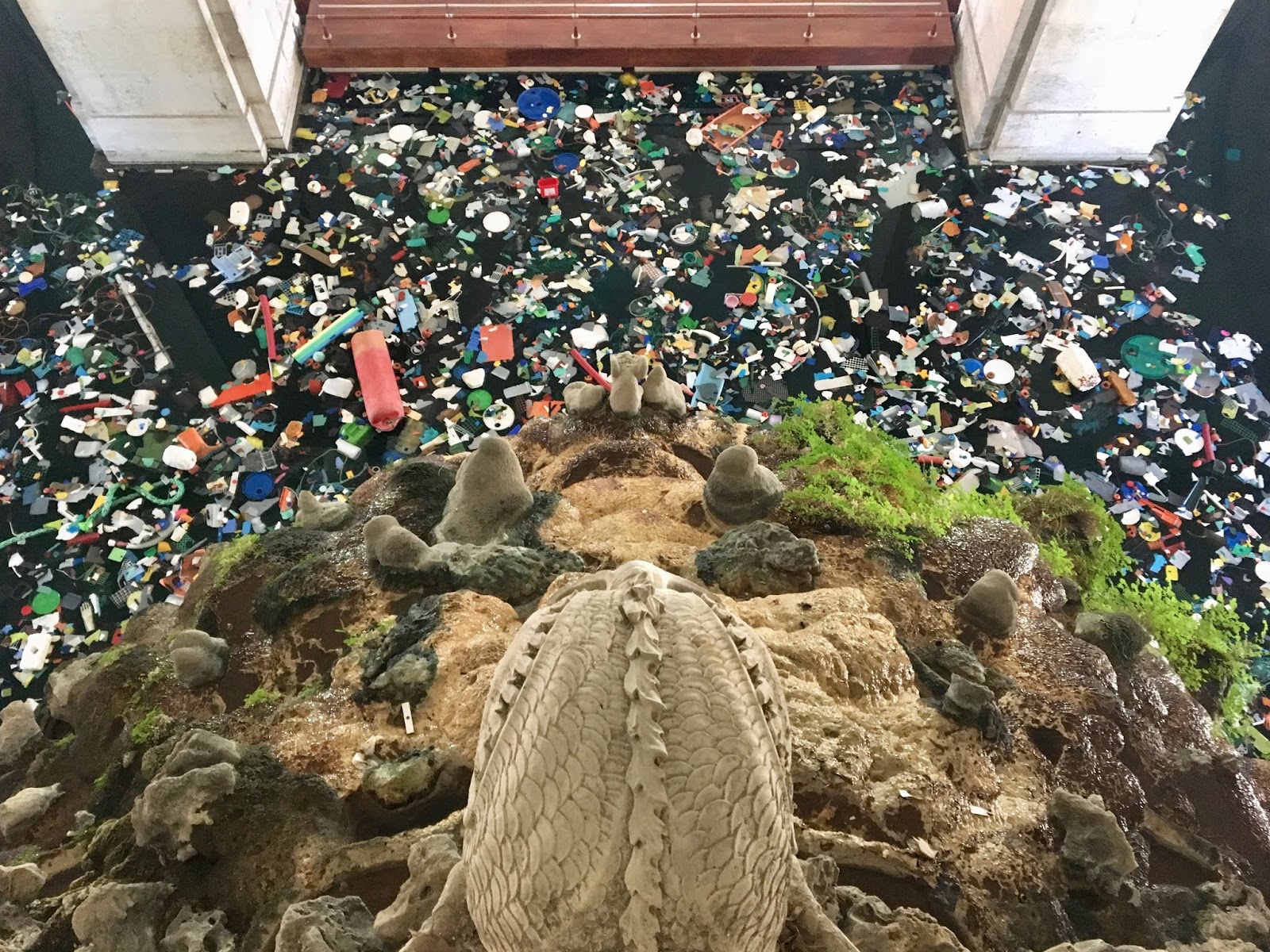
Walk around the Mãe, and there is a small, somewhat tropical, formal garden, with spitting lions and views of the streets below. Entry is up a turning, narrow stair at one side, through a door, and the space suddenly opens. At the far end is a mossy, lumpy mound of green, with a classical dolphin head drooling down into the pool.


Step closer and we are shocked to see the pool is filled with garbage – it's an art installation, and includes the "fish" made from beach plastic displayed on the outer walls. And then a group of school children, that had evidently been in another part of the Museu, re-enter and fills the room with chatter, laughter, and all their echoes. Anticipate a cool, clean, quiet place and get none of those things; but it still is an amazing space.


Up another even narrower stair, we arrive at the gate above the dolphin; and then narrower, and out the top. The roof level includes another, shallow pool, though currently dry. Walk through the empty pool to the other side and there are amazing views out to the city.


Back inside to cool off, and we find a large wheel, which might possibly drain the reservoir. The school children leave and we are plunged into silence, and left to enjoy the colors, stillness, and reflections on the water's mirror surface.


The next stop is a fifteen minute walk to the north – the Aqueduto das Águas Livres (Aqueduct of the Free Waters). The entrance to the Aqueduto is off a busy street, down a stone walk, and into a walled garden in the shape of a quarter circle. The shade of the trees keeps the benches around the outer wall cool to the touch. The bilheteria (ticket office) is in one corner, and the quarter circle literally funnels you to the top of the structure.


Unfortunately, it's just after noon time, and orientation of the Aqueduto is north-west, so there is very little shade. It's about a kilometer long, and there is a right turn to the north about two-thirds the way across. The views of the arches and the interrupted city below are fantastic.


Just past the "bend" is an open door that allows a peek down the hollow of the aqueduct (there is no water), and a crossing to the other side, with views of the Ponte Vinte e Cinco de Abril and the Cristo Rei (the suspension bridge and the monumental Christ figure). Though a bit too sunny, but with enough breeze to make it tolerable, the walk is very enjoyable. It's fascinating to see, and a joy to appreciate, the astonishing engineering and architecture.


Sunday, August 18, 2019

Lapo - A Project Connecting the Universe


This is Lapo: a Café, Atelier (gallery and shop), and Sala Provador (fitting and tasting room); it is the dream-project of our friends Bruna and António, who have appeared in the blog in previous posts. 

Our journey with Lapo begins with our visit during a past Christmas, when we view the raw, gutted building. It's a former bakery and work space, with the remnants of a kind of club upstairs. They describe their plans, and I'm bewildered as I think about how much work it may take to bring their dream to life. I'm also not completely sure I understand how all the pieces fit together.

"é um espaço dedicado à intervenção cultural e à liberdade artística" (it is a space dedicated to cultural intervention and artistic freedom) 
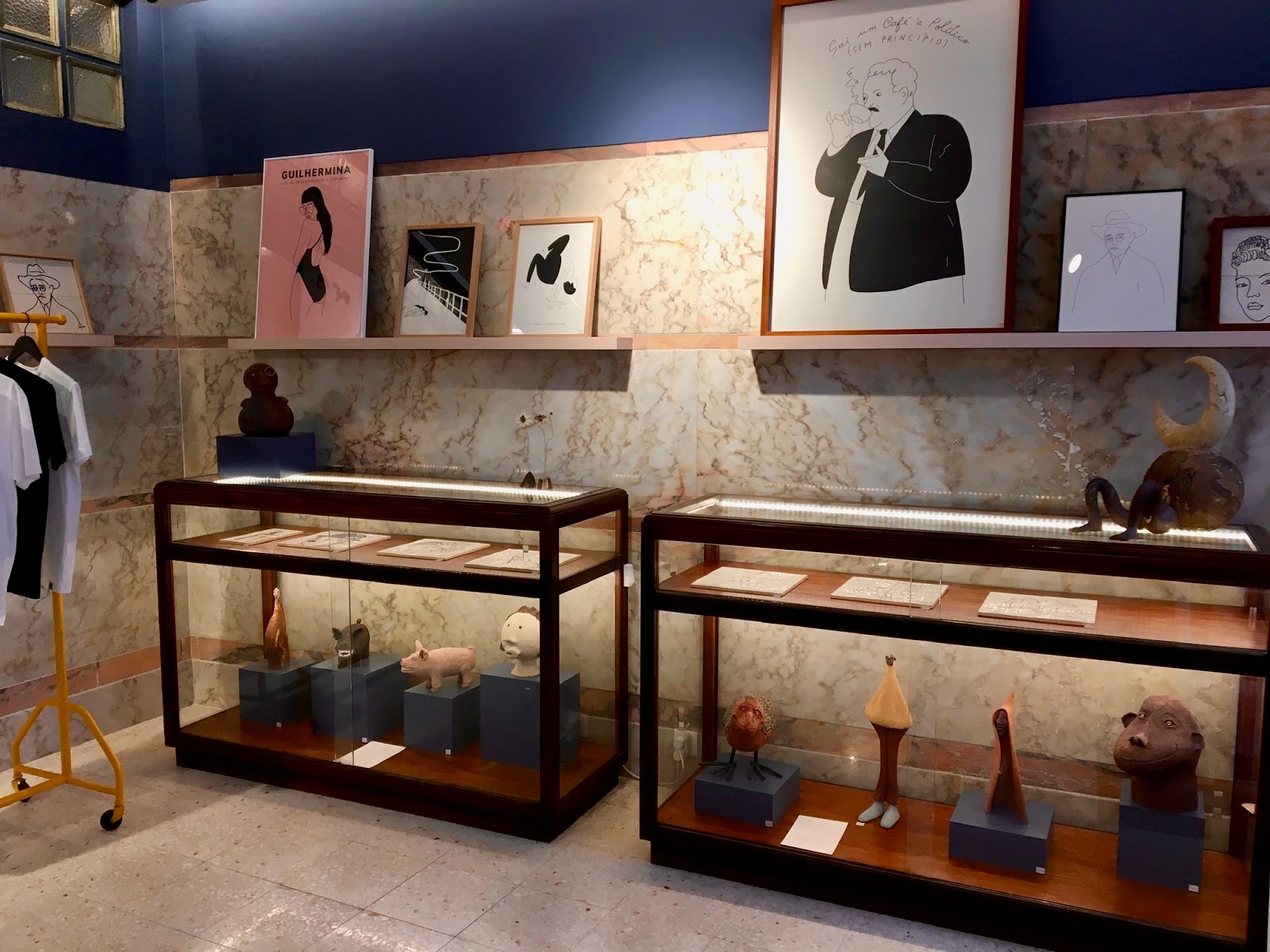
Less than two years later, we are sitting in their beautiful Café, talking about that work and the launch of the project. I'm amazed at what my friends have been able to accomplish. The Café is bright, filled with books, magazines, and vinyl records. Some patrons are drinking and reading, while another group is working around a laptop. They are surrounded by Bruna's graphic artworks, which begins to reveal the attitude that drives the space. Free-thinkers and peace-makers are represented in tiles and prints. António is the philosopher; the space is intended to provoke. Art, performance, politics, music, movies, food and drink are all incorporated so visitors may be nourished in several dimensions.


At street-level is the Atelier, an art gallery with a mission to nurture like-minded artists. The space is filled with ceramic sculptures from a mother-daughter duo that lives in the woods of Northern Portugal – so the figures and the animals paint a broader, but still intimate image of the country. Bruna's artwork is also on display, with framed tile pieces, posters, and graphic t's. The space is filled with color, humor, and positive energy.


Behind a curtain is the Sala Provador – a fitting room where, during the day, customers may try on the shirts. Slide open the mirror, and through the looking glass is a tasting room, a restaurant open at night. At the far end of the dining room is a small stage, where Bruna and António a can invite story tellers, musicians, and artists to share their works with the diners, fostering thought and conversation. Thinking back on the state of the space when we saw it two Christmases ago, I'm absolutely floored at the size, quality, and character of the room. It's unique, experimental, and fun.


Our arrival in Lisbon is mirrored by the departure of a member of Lapo's staff. Thursday is the last day of work for Emma, a lively, well-travelled young lady, who speaks English with a British accent (ie "no" accent?). António is particularly heart-broken to lose a trusted and hard-working staffer; she is clearly much more than an employee to Bruna and António  We all share stories of our travels, our plans, and immediately hit it off. But António is still concerned that he might not have the same "luck" in finding someone to replace Emma. I try to console him: by putting out positive energy and keeping a thoughtful mission, you will attract good people. The project is not just a business, it's a community that brings people together.

So many great words, so many positive intentions. Does it work? Two days later we are having a wonderful dinner with our friend Jennifer at Alpendre near the Sé (cathedral). It's home-cooked Portuguese food served by a practical-joking wait-staff – it was Jennifer who took us on a tour of Telheiras. We are describing Lapo to Jennifer when she suddenly stops and asks, "Does Bruna have a twin sister? I think I know Bruna's family." In all Lisbon, we know maybe six people; how is it that these people are somehow connected? Jennifer shows us a picture of Bruna's aunt and Bruna's mother on her phone – Bruna's mother is on Jennifer's phone.

We decide to take dessert at Lapo and share this amazing coincidence with Bruna and António  We all sit down for another round of story-telling and connection-making. I'm still not sure what to make of this coincidence, an utterly mind-blowing piece of serendipity. But is has to be some kind of proof that Lapo is working. People are finding each other. The culture grows. The world gets better.

Friday, August 16, 2019

Semana de Lisboa Número Um


Our first week in Lisbon ends on a sleepy, hot Friday, doing laundry and catching up on rest. It's been a great week, but not without its low-lights, too. Most of our week has been spent with our realtor, apartment hunting. What a way to learn about the neighborhoods of Lisbon, right at ground level. Our realtor is Marta; she is a superhero. She's been patient, generous with her time, and a good listener. We have Marta thanks to Liz, from Lisbon Diaries (they were on House Hunters International – thanks Liz!). You can check out their tour of Alvalade – also embedded below.

Our first stop was, in fact in Alvalade, where we saw a cozy two-bedroom (T2) right along the park (Campo Grande). The area was impressive, with lots of local flavor, thin tourist traffic, and an easy walk to the Universidade de Lisboa, where we plan to take language classes. The big downside was that the area is right along the flight path to the airport; big jets are flying pretty low by the time they pass Campo Grande, and it's brain-shakingly loud. Away from the flight path, things calmed down quickly, and we were able to enjoy Alvalade's shops and cafe's. It was really "local" and Portuguese, and easy to imagine making a wonderful home-base here.


The next stop on our tour was to the south, in Saldanha. This was a really gorgeous neighborhood, with lots of local activity; beautiful wide streets lined by old buildings, filled with food and the smells of food (Liz and Marta also toured this area – also embedded below). The apartment we saw was in an older structure, very charming, cramped, and four flights up with no elevator. Though the flat was a bit of a disappointment, our tour of the avenues of Saldanha and our vegetarian lunch at The Green Affair were amazing – the restaurant reminded us of our our recent "going away" lunch at Greens in San Francisco, but for just a third the price. Saldanha seemed a near-perfect mix of old and new, and conveniently, the transfer point for the Metro's Linha Amarela (yellow line) and Linha Vermelha (red line).


The next day, the fun paused while organized, demanding, jet-lagged Americans run strait into Portugal's bureaucracy: three and a half hours sitting in the Serviço de Finanças to apply for our tax ID. After, we saw another apartment, which was nice but in an isolated area next to the airport (Quinta das Conchas). No need to going into details on those.

We ended the day seeing a beautiful apartment in Telheiras, which is at the end of the Linha Verde (green line). It was a tonic: a peaceful, park-fulled community, which was evidently settled by doctors from the Universidade, given all the professor titles in the street names. The apartment was on the ninth floor, had great views to the north and east. It was larger, newer, and generally more comfortable than all the previous places, with excellent finishes and furnishing. So we ended a rough day on a high; it's quite possible the bad start made the apartment and the area seem that much better.


On Wednesday we returned to Alvalade with Donna's cousin, José Miguel. As we toured the streets with José Miguel, he stopped to say hello to various people in shops and on the street. We heard the Portuguese were friendly but some other-level stuff was happening. Turns out José Miguel lived in Alvalade for nearly two decades, and only recently moved out of the city, so he knew everyone, and made the perfect guide. He took us to a restaurant called Pau de Canela, a neighborhood-y lunch place and coffee shop, where we enjoyed a few wonderful Portuguese dishes. After lunch we went to the local market hall, which was basically shut down for the day, but seemed to be an amazing local resource; one could easily imagine shopping in the enormous hall.


After our tour, we made our way to an area called Picoas, which is next to Saldanha where we took a look at another small unit in an old building. We could not find it; the numbered addresses on the street end before the number we need. We stopped into a snack bar to figure things out and sit in the air-conditioning; we found a seat at the back with a view of an alley. Turns out the apartment was in the building, in the alley. Though well finished, it was not really our idea of Lisbon living, though it felt like a place a young student would enjoy.

The next day we returned to Telheiras. where we met our friend Jennifer from our Portuguese language classes in Sausalito. She was already taking advanced language classes at the Universidade, and renting rooms in Telheiras. We walked to the local supermercado, which was basically an enormous mall, with adjoining stores on different levels. Near the Metro, however, the park-like feel of the neighborhood was most apparent; it was holiday, so it was not real busy, but there were bakeries, cafes, and a popular burger place all connected by a trellis covered in grape vines. It was a refuge from the crush of the city, and seemed an ideal area to set up shop.


By now, after checking a few more apartments on Thursday, it's clear unless we come across a real stunner, we are moving to Telheiras. So we have to cross some t's and dot some i's today, and get the funds lined up. Thank goodness for Marta.

for convenient viewing, here are Liz and Marta taking on Lisbon: