
Our tour of Ireland restarts in the town of Limerick (pop 102,287 in 2022). Centrally located on the River Shannon, we can use this as a jumping off point to explore the island. Today's daytrip to the village of Adare (pop 1,129 in 2016) via the local bus service (Green Bus Route 300), about forty-five minutes on the N21.
The Ryder Cup 2027 is scheduled to be played at the 'Manor' course, so workers are cleaning the River Maigue Bridge (1390-1410) and have closed one lane. There's an epic traffic jam. But once off the bus, we find ourselves at the "Washing Pool" in Adare Town Park and transported to a bucolic and peaceful scene.


We join our tour of the Desmond Castle (early 13th century) across the road at the Heritage Centre (the only way to see the Castle). A minivan takes us into the congestion, back over the River Maigue, then through a nondescript security gate.
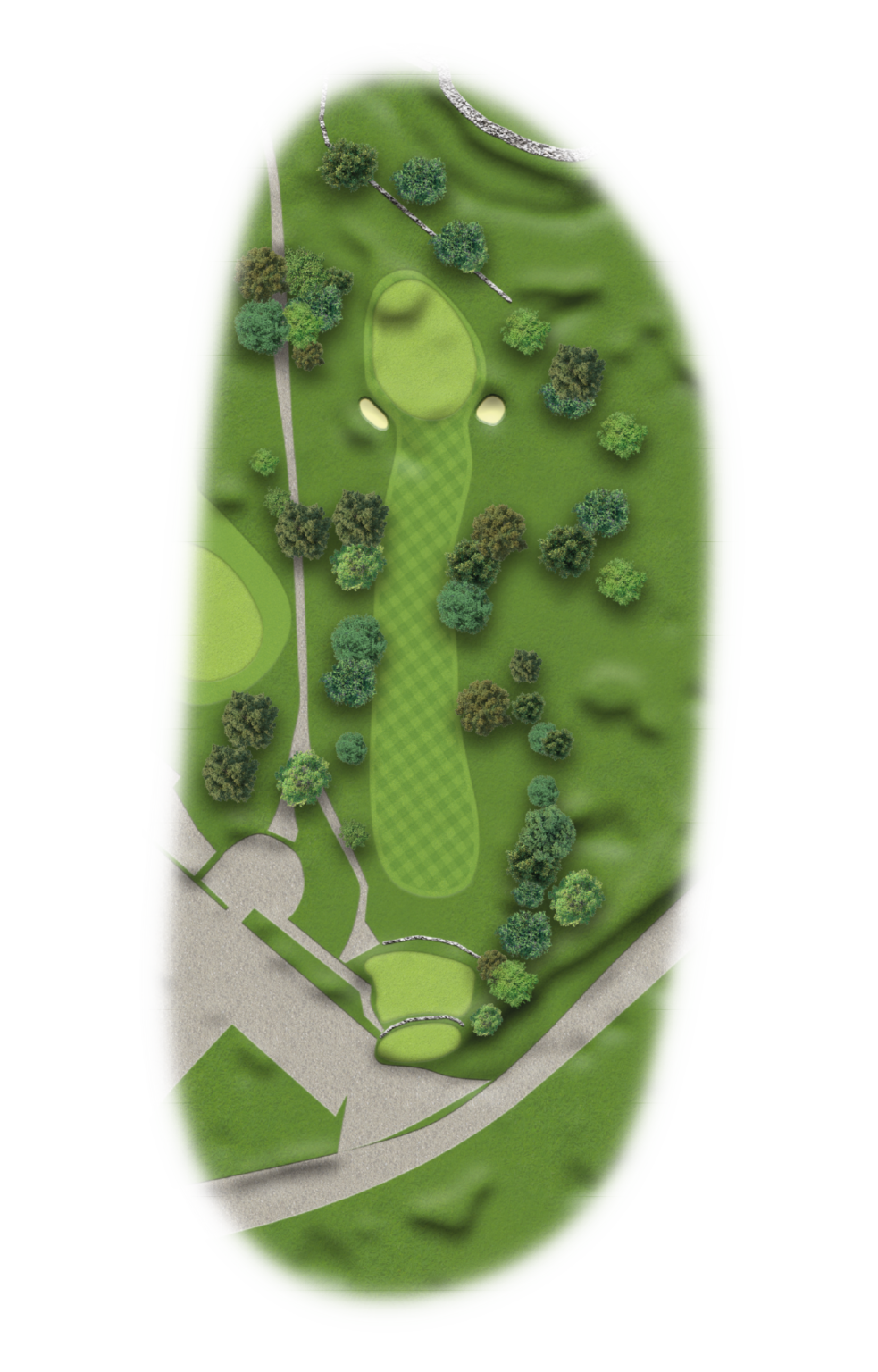
The Castle is romantically ruined and stands just above the tidal spillway on the river and between the first green and the eighteenth tee box of the local 'Club' course (not the Ryder course) – fortunately, the approach is free from divots (no playing out of the Castle). Its history is also tied to a branch of the FitzGeralds, a dynasty we learned about on our Archaeological Tour near Dingle.


The path leads down to the west-facing central tower gate with a portcullis. We enter the outer bailey. The Great Hall is near the river to the south, and the Tower Keep is to the north and separated by an inner gate. The outer bailey is surprisingly expansive, perhaps made more so by the ruined buildings along the river.
The Keep is defended by a shallow moat, isolating the northwest corner. The blocky gate tower and the tower Keep rise above and compliment with the curved curtain wall. Evidence of on-going restoration work appears near the outer gate and the buildings opposite the inner gate. Otherwise, the space is beautifully green and tidy.


From the west, we see the remains of a water channel for a mill, next to the partially reconstructed stables and service areas. Stone gables frame a building with a well, ovens and kitchen space. From here and to the east, the north wall of adjoining structures is almost entirely missing, though a series of column foundations suggest the grandeur of the Great Hall.
The stonework shows the architectural evolution: a rougher, arched pair of Romanesque windows to the left and an elegant pair of taller, Gothic windows to the right. Further east of the Great Hall, are more support spaces, including an additional oven.
Through the gate, the inner bailey is compact and filled with the shady, old trees. Turning to our right, we climb the stair to the upper level or the parapet with views up to the hauntingly derelict Keep


The minivan returns us to the Heritage Centre, and we begin our exploration of the village. The Holy Trinity Abbey Church (13th century, restored 18th century; virtual tour) is next door and anchors the heart of the town. Its tall fountain, called simply the Adare Fountain (Charles Hardwick, 1855), with elevated stone 'high cross' sits street-side (top image). The basin is triangular (with truncated corners) in homage to the Trinitarians and is echoed by the three-winged base and trefoil forms. And this results in a hexagonal column shaft and the carved transition featuring three-leaf shamrocks at the square base of the cross.
In grateful memory of the zeal shewn by thepeople of this village in quenching the fire at theOffices of Adare Manor on the 1st of April 1844.This supply of water was brought and fountainerected by Caroline Countess of Dunraven.Lord prosper thou our handiwork - 1855
The geometry of the interior is less consistent: a six-bay central nave with a two-bay north aisle and a five-bay south aisle. The crossing, chancel, and the Lady Chapel to the east are each covered by a single-bay-deep vault, all at varying heights and with different treatments. The nave is covered by black, nineteenth century trusses. The south transept is under the prominent exterior tower.
There is a lovely stained-glass cycle in the aisle windows, all from the nineteenth century (Hardman & Co), illustrating the Life of Christ and accentuated with angels and narrative banners and texts – excepting the "Coronation of Our Lady" which is contemporary.


In the south lateral chapel, facing the transept, a triple-lancet window shows the "Adoration of the Magi" (1854; three Magi and St Jospeh–?) accompanied by an splendid "Pietà" sculpture.
The marble retable stands in front of an ethereal sanctuary screen with quatrefoil openings made of bronze. Rows of gold angels inhabit the five leaves, all under the motto: "QUAM DILECTA TABERNACULA TUA DOMINE VIRTVTUM" (Psalms 84:1). Walking to the back of the screen, we get a better look at the exceptional, five-lancet "Christ in Majesty" (1894) with the Twelve Apostles (eleven shown) and a declaration of the Trinity:
Going therefore, teach ye all nations baptizing themIn the name of the Father and of the Son & of the Holy GhostHe commanded us to preach to the peopleHe that believeth and is baptized shall be saved
Two small cinquefoil windows further demonstrate the mission of the Trinitarians, as they show missionaries bound as hostages for ransom as well as Saint Patrick's bringing Christianity to Ireland (holding three shamrocks). The composition is topped with a trefoil of the Holy Spirit.


Exiting the Church, we walk down Main Street (N21) and watch the crawling traffic crawling. The stationary cars contrast anachronistically with the sinuously shaped thatched roofs of the shops. Past the 'village gate' of the Manor House, the road tips downhill, the village shops end, and the landscape opens into broad lawns.
In the distance we can see the tower of the so-called 'Black Abbey' (St Nicholas' Church) – 'Black Abbey' as opposed to the Trinity Church, known as the 'White Abbey', is named for the color of the monks' habits (it was originally an Augustinian friary).
After an easy walk down to the Bridge, we enter the construction zone. The workers seem to expect our approach and simply ask us to be careful. During the change of direction, we cross the road through the gap in the traffic. We step onto the prow-shaped extensions of the pile-cap that rise to the level of the deck; from here, the views of Desmond Castle are tremendous, with its fantastical reflection on the flickering surface of the River Maigue.


Saint Nicholas' Church (c1315, Church of Ireland; restored 19th century, Augustus Pugin) appears to be more Neo-Gothic than true Gothic, with solid, evenly cut and laid ashlars. However, passing through the eastern portal to the cloisters, we discover old, shaped masonry and vaulting, evidently from the fifteenth century.
We stumble around looking for an entrance to the church, then notice the highway workers going in and out from a doorway on the far southwestern side.


The interior is a collection of fragments. The partial south aisle leads to the modest central nave. The aisle is four irregular bays to the base of the tower. This acts as the 'crossing, though there are only two shallow chapels rather than transepts. Therefore, the chancel and altar feel distant from the worship space.
The stained glass seems to be from two different eras (online guide). At the end of the south aisle, the four-lancet window depicts scenes of Christ's charity (Hardman & Co, 1855), including the "Baptism of Christ" (bottom, center-left) and the "Last Supper" (bottom, center-right). However, the triptych to the right has a richer, more illustrative quality; the "Adoration of the Magi" (Heaton, Butler and Bayne, 1891 – also compare 'Adoration' above) is a single scene in three lancets. The one window is more graphic, more Gothic, and the other more like a painted Baroque canvas.
Also rather touching, the local parishioners have left their colorful kneeler cushions out in the pews.


The over-sized altar window is five lacents with scenes of the life of Christ (Hardman & Co, 1850): "Nativity" (left), "Crucifixion" (center), and "Ascension" (right). Then, at the south side of the chancel, we find a pair of triptychs. First, we see a trio of beautiful portraits (Mayer & Co, 1886 – from left to right): "S Mary B V (blessed virgin–?)", "Our Lord & Saviour", and "S Mary Magdalene"; and next, The Three Virtues of "Faith", "Charity", and "Hope".
In the western wall, another triptych (Hardman & Co, 1853) makes good use of this graphic presentation: "Raising of Jairus's Daughter" (left), "Angel and Women at the Tomb" (center), and "Christ Blessing Children" (right). The angel in the center is particularly effective, especially as it faces the "Crucifixion" window at the altar.


Leaving the Church, we back-track, climb the hill, and re-enter town. In the village, the gridlock has only gotten worse. But we have plenty of time to find lunch and explore the shops. Main Street may be filled with vehicles, making it difficult to cross, but the cars move slowly in both directions, so a general sense of serenity perseveres.
Despite the consistent scale, the variety of architectural details, flower boxes, and street furniture give the village a cheerful character. The ridges of the thatched roofs appear to be woven, a detail known as liggering. We have lunch at a window table across from the Community Hall and watch the traffic and the people drift past – we are in a time bubble.


We catch the afternoon bus back to Limerick, making sure to arrive in time to enter the Saint Mary's Cathedral (12th-14th centuries). After yesterday's debacle with the ticket counter staff, we are shocked to find a team enthusiastic docents to explain the artwork. After entering the narthex, we turn immediately to the right.
The Cathedral has memorial names for all the windows. For example, the Edwards Window (Michael O'Connor, 1849) is behind the ticket counter, two lancets with "The Crucifixion" and "The Resurrection" – Isabella Margaret Edwards died at the age of 27, was the wife of Rev'd Arthur Willam Edwards (Vicar Choral) and the daughter of Right Rev. William Higgins (Bishop).
Through a Gothic screen in the south aisle, we find Saint George's Chapel ('Glenworth Chapel'), the burial tombs of the Earls of Limerick, and its amazing 'starry' ceiling. The strange object hanging from the tie rod is chain-shot dating from the Siege of 1691 and recovered from the Cathedral walls. The Glenworth Window (O'Connor, c1850) displays six scenes from the life of Christ in three lancets: "Agony in the Garden", "Transfiguration", "Scourging", "Bearing the Cross", "Crucifixion", and "Resurrection".
I go to prepare for you and if I go and prepare a place for you I will come again that where I am there ye may be also. John XIV: 2-3
With the enclosed Chapel, the aisle feels narrow and shortened. The structure is simple chunky, Romanesque with touches of Gothic detailing. There is a rough, arched clerestory and a proper crossing and transepts at the chancel. The nave steps up from the narthex and is three bays long to the crossing


Heaton, Button and Bayne also provides the next windows in the south aisle. In the center of the aisle, the Hobson-O'Brien Window (HB&B, 1907) gives two scenes in four panels: "Elijah and a Barrel of Meal" and "Raising of the Widow's Son at Nain". The image rises to form Gothic aediculae with the Four Evangelists (left to right), "Matthew", "Mark", "Luke", and "John". The 'four' reduces to three angels holding the text, "The greatest of these is Charity". Two lozenges are above with symbols for "Faith" (Bible) and "Hope" (anchor), then "Charity" (rose, 1 Corinthians 13: 13) holds the point of the tracery.
Just to the right, the McKern Window (HB&B, 1883) is dedicated to John McKern, a chorister who (according to the guidebook) "possessed a bass voice of unusual beauty and quality". The Window exhibits three 'musical' portraits from the Old Testament: "Jubal" (pipes), "David" (harp), and "Solomon" (musical notation), and angles holding the script, "Sing unto the Lord all the Earth" (Psalm 96: 1).
The Barrington Window (Clayton & Bell, 1858) is nearest the crossing and fills the small Consistorial Court (chapel) with kaleidoscopic color. Its five panels present fifteen scenes from three parables: "The Ten Talents" (top row, Luke 19: 11-27) "The Good Samaritan" (middle, Luke 10: 25-37), and "The Vineyard and the Wicked Tenants" (bottom, Luke 20: 9-19).
The Westropp Window (Willam Slater, Clayton & Bell; 1862), in the south transept completes the spectacular cycle of glass on the south facade. It is arranged as a triptych flanked by two additional lancets, one-three-one. It is also known as the Old Testament Window as its geometric tracery is filled with the stories of "Noah", "Abraham", "Moses", "David", and "Solomon". The series for "Noah" (left lancet) is delightful, with 'The Flood' in the second roundel from top and 'Mt Ararat' just below – with all the animals walking towards the drying sun.


The south aisle ends with the Westropp Reredos (James Redfern, 1862), an incredible Neo-Gothic relief of the "Agony in the Garden", the "Resurrection", and the "Entombment".
At the east end of the Cathedral, the O'Brien Memorial Window (Clayton & Bell, 1859-60) rises above the retable (Jones & Willis, 1910). "Our Lord Seated Overhead the Charity of Dorcas" (Christ in a mandorla) is in the center light, with the lower section devoted to "The Good Samaritan". Again, in the spirit of Charity, the four roundels of the left panel illustrate "Burying the dead, a stranger ye took me in, In prison and ye came unto me, Thirsty and ye gave me a drink.", and those of the right panel, "Guiding the blind, Naked and ye clothed Me, Sick and ye visited Me, Hungry and ye gave me to eat.".
To the left (north) of the east window, the Thomond Tomb occupies the north wall of the chancel and includes fragments of the coffin lid of the Domhnall Mór O'Brien, King of Thomond and Limerick (c1194) This, along with the statuary fragments of the effigy of Thomond Lord Donagh O'Brien (c1624) and that of his wife, Countess Lady Elizabeth FitzGerald (c1617), are all set in a Baroque triumphal arch (1678).
The window to the south is called "The Building of the Temple" (Clayton & Bell, 1870), another memorial to a member of the O'Brien family. A small rose window with the "Agnus Dei" is just below inside a low arched niche.


Turning from the chancel, the Caswell Window (Clayton & Bell, 1880) adorns the north transept and repeats the one-three-one format from the Westropp Window in the south transept. The three middle images are richly rendered: "Saint Peter" (far left, with keys), "The Sermon on the Mount" (three center panels), and "Saint Paul" (far right, with sword).
The north transept is also known as the Holy Spirit Chapel, and includes the unusual Leper's Squint, a small ledge used to give communion to those suffering from leprosy. The Arthur Memorial is the tomb at the center of the Chapel, with the inscribed text:
Here lies in the bottom of the tomb, removed from the world, Geoffrey Arthur, formerly Treasurer of this church. He rested in perpetual peace on the 6th light of May in the year of the Crucified Lord 15/9. Thou who passest by take heed that thou sayest here a Pater and an Ave.


Next, Saint Nicholas' Chapel features the seated sculpture Memorial to Bishop John Jebb (Edward Hodges Bailey, c1833). Above this Memorial, The Ascension Window (Clarke Studios, 1961) is a curveball – another one-three-one configuration, but with a unexpected modern sensibility: clear glass, gridded tracery, saturated colors for the figures, and an unframed predella.
The Preston Window (O'Connor, 1850) is on the north side of the Baptistery, the west end of the north aisle, and features "Saint Simeon" as well as an elaborate dedication and heraldic crest. The Bunbury Window (HB&B, 1926) is on the west side of the Baptistery, with an image of "Chris Blessing the Children" that fills both lights.
"The Cleeve Angel" (c1908; we saw the Cleeves factory yesterday) is from the tomb of Thomas Henry Cleve in the nearby graveyard, relocated for its preservation. The Kirwin Memorial Window (Clayton & Bell, c1860) shines over the Angel; the illustrations are "The Good Shepherd", "Christ with the Little Children", and the Four Evangelists in the roundels (St Matthew, St Mark, St Luke, St John).
The Napier Window (O'Connor, 1848) is in the central bay of the north aisle, Saint Mark's Chapel; the scene is "Raising of Jairus's Daughter".
Weep not, she is not dead but sleepethTo me to live is ChristAnd to die is gainLord what is my hope?My hope is even in thee
Finally, the Barrington Memorial Window (Clayton & Bell, 1863) fills the three tall, thin lancets on the west wall over the narthex. It is densely decorated and a little hard to read, but the guidebook says (from bottom): the left lancet has "Saint Peter and Saint John at the Sepulcher", "Journey to Emmaus", "The Ascension", and "Pentecost"; the center lancet has "The Last Supper", "The Agony in the Garden", "Christ Bearing the Cross", "Women at the Sepulcher", and "Risen Christ Appears to Mary Magdalene"; and the right light has "The Nativity", "The Flight into Egypt", "Disputation in the Temple", and "Baptism of Christ".


We while away the hours in the Cathedral. Maybe the staff recognizes the tourists who really want to dig into the history; they are knowledgeable and chatty. The gift of the gab is real. Even the lady dusting the railings stops to share some of her favorite details and stories – or maybe she just wants to avoid the dusting. In any case, we thoroughly enjoy our time.
After dinner, we wander through the darkening streets to Saint John's Cathedral (Phillip Charles Harwick, 1857-59). The guidebook still claims this is the tallest spire in Ireland, so of course we want to see it. It's blockier and visually heavier than its rival in Cobh and lacks some that spire's tapered elegance; it's more 'early' Gothic than 'high' Gothic, though Saint Colman's Cathedral (Pugin & Ashlin, 1868-1919) was built later. But having spent the entire afternoon at Saint Mary's, it is too late go inside (online tour). Still, the church and spire are magnificently lit, and the statue of Saint Peter with the Agnus Dei is imposing and compelling.
Saint John's Drinking Fountain (1865) is across the street and draws us back towards town. We try to hit some of the other guidebook suggestions, though nothing is open except the bars and restaurants. We spy the Archangel and dragon on the top of the tower of Saint Michael's Church (1779-81; rebuilt, Marin Morris, 1881). and we pass the tent-like cover of The Milk Market (19th century).
It's strange to think of Limerick and Adare as neighbors if not cousins – "Stab City" vs "Ireland's Prettiest Village". One is gregarious and gritty, the other bucolic and bougie. When the Ryder Cup does arrive next year, not everyone is going to fit in that tiny, thatched-roof hamlet or on its Main Street; some will have to stay in Limerick and ride the bus. We suspect the city will be welcoming and ready with a tale or two.


No comments:
Post a Comment